11 predictions for 2026
PLUS: What I got right (and wrong) about 2025

As 2024 came to a close, I noted here that two big stories were beginning to crowd out everything else in tech: the rapid development and diffusion of artificial intelligence, and the shifting policies of tech giants as they prepared for life under a re-elected President Trump.
Twelve months later, those stories did indeed define the year here at Platformer. On the product side, this year saw the first consumer agents, deep research, Google’s AI mode, OpenAI’s hardware ambitions, Sora, and the Atlas browser, among other key developments.
Meanwhile, AI policy got both looser and more restrictive. Frontier AI labs eagerly made deals with the US military, reversing long-held policies against building weapons of war, and began leaning into adult content, from erotica in ChatGPT to Grok’s sexbot companion. On the other hand, amid rising evidence that chatbots were fueling a new mental health crisis, AI companies placed new restrictions on teen use and added parental controls.
All that took place against the backdrop of the new Trump administration, whose impact on the tech world was felt almost immediately. The year began with Meta’s surrender to the right on speech issues, a move that included changing its policies to allow for more dehumanizing speech against minority groups. It also killed its DEI program, a move followed by many of its peers, and shut down systems that once prevented the spread of misinformation.
With DOGE, Elon Musk ran the same playbook for cost-cutting in the federal government that he had done previously at Twitter, to devastating effect. The new administration’s embrace of the tech right showed up quickly in its policy proposals, including most notably in its accelerationist position toward AI.
By mid-year, Musk and Trump split. But the broader relationship between Trump and Silicon Valley remained mostly positive — particularly for Meta — despite the fact that the government continued to pursue and antitrust cases against both that company and Google. (Meta won its case; Google lost.)
I spent much of the year feeling increasingly disillusioned by the platforms’ cynical embrace of Trump and how little it seemed to cost them in users or revenue. (Even Tesla stock, which plunged in the wake of DOGE’s outrages, is now up almost 10 percent year over year.) I noted in particular the disquieting silence from trust and safety executives, who once spoke up proudly for human rights but understandably went quiet amid death threats, job insecurity, and threats to their immigration status. Platformer’s traditional focus on issues related to content moderation came to feel somewhat quaint in a world where principled leaders had been largely replaced by Trump appeasers.
And so I found fun where I could: an unusual and revealing dinner with Sam Altman; a speculative preview of how Substack might change to live up to its lofty new valuation; and some hard-won lessons about productivity.
And I found myself relieved that, at long last, more countries had begun to take child safety on platforms more seriously. Australia’s move to ban children under 16 from having social media accounts, despite the real harms to free expression, still strikes me as inevitable given platforms’ inability to protect their users from child predators, AI suicide coaches, sextortion, and other catastrophes.
Through it all, you all have kept me going with kind emails, thoughtful comments, and the occasional angry (but welcome) direct message on Signal. Thanks to all of you for reading Platformer over the past year, especially the paying subscribers who allow me to do this for a living and to employ our small but mighty team. (Consider becoming one of them, if you haven’t already?)
This year we’ve made some changes to our format that you all have responded very positively to. Next year we’ll begin a new experiment in audio. Five years into this experiment, I remain more grateful than ever that I get to wake up and help make Platformer for you. And as bleak as the news cycle often seems, I remain excited to see what 2026 will bring.
See you here on January 5.

As always, in the name of pundit accountability, I begin by checking in on my 2025 predictions.
What I got right
The AI culture war begins. From executive orders banning “woke AI” to one attorney general’s suggestion that it should be illegal for ChatGPT to criticize President Trump, this one played out exactly as I imagined it would.
The child safety fight comes to chatbots as well. “With more teens using chatbots — and some of them having tragic outcomes — look for there to be more pressure on AI labs to add restrictions, warning labels, and safety features for their under-18 users,” I wrote. And they did.
Google, Apple, or both will begin to offer age verification at the device level. Google did, at least in some states. Apple did, too.
The big AI companies remain competitive with each other. “Expect regular changes at the top of the Chatbot Arena leaderboard,” I wrote. And there were — although some of that was because Meta was cheating.
Meta has a Llama scandal. Did I mention that Meta was cheating?
Everyone copies Meta Ray-Bans. Google and Samsung announced Android XR glasses; Apple and Snap also reportedly have glasses of their own on their way or in development.
The flop of “Apple Intelligence” results in the company scrapping its existing strategy. Yup and yup.
“Remarkable Alexa” underwhelms. Yup.
Google loses its ad tech antitrust trial. Yup.
Mixed results
The TikTok ban goes into effect. It did go into effect … for about a day. I successfully predicted that the Supreme Court would side with Congress. I did not predict that Trump would ignore both other branches of government and extend the ban indefinitely. (News of a sale agreement was reported today, nearly a year after the original deadline.)
AI will show continuous incremental improvement, but no exponential leaps. Depends on how you define “exponential,” really. In my own work, I found large language models to be significantly more capable than they were a year ago. Their ability to draft research briefs, write thoughtful interview questions, fact-check and copyedit dramatically increased over the past year. Software engineers reported seeing even larger productivity gains. For most people, though, AI still hasn’t changed their job all that much.
The first year of "the agentic era" mostly disappoints. Certainly it underperformed relative to the hype. Consumer agents from OpenAI, Anthropic and Google struck me as something closer to a party trick than a useful tool — and the party trick typically took 20 to 30 minutes to complete. That said, enterprise agents did have some notable successes — witness the $100 million in annual recurring revenue for the B2B agent company Sierra, for example, or Claude Code hitting $1 billion in ARR after just six months of existence. (See my ethics disclosure!)
Bluesky and Threads remain in a productive rivalry. For the most part, I’m not sure either platform really even thinks of the other as a rival. Each has developed into its own thing, neither of which has the heat or relevance of Twitter in its heyday. (Nor does X, for that matter, no matter what the dead-enders there still insist.)
What I got wrong
An activist investor group demands changes at Snap. They simply did not.
The bro-ligarchy collapses, as Trump comes to resent being seen as a tool of Silicon Valley. The thing I got the most wrong this year. On one hand, yes, Trump and Musk had their predictable blow-up. Aside from that one relationship, though, the tech right and Trump are still painfully close. Just this month, the Andreessen Horowitz wing of the Republican party pushed through an executive order that seeks to ban states from passing most laws seeking to regulate AI. This is despite the fact that the ban is hugely unpopular with scores of elected Republicans. Perhaps Trump will resent being seen as a tool of Silicon Valley someday, but it did not happen in 2025.

Predictions for 2026
With that out of the way, here are some predictions for next year.
The AI bubble won’t burst. The bubble talk that dominated tech discourse in 2025 will continue all year long. We shouldn’t be surprised if there are some spectacular flameouts next year, particularly if models from the frontier labs improve enough that businesses can deploy them directly and not pay $50 per user per seat per month for some AI startup’s product. And some public companies will undoubtedly lose tens of billions of dollars trying to catch up to the leaders. (The odds of Meta catching up are long, and growing longer.) But I predict that 2026 ends more or less as 2025 did, with OpenAI, Google, Anthropic, and mayyyyybe xAI jockeying for prime position. As the analyst Benedict Evans recently wrote: “The fact that AI is working really, really well, and has no signs of hitting a wall, and will change the world… Does NOT mean that there cannot also be a bubble in AI. In fact, that’s generally the kind of thing that *causes* bubbles.” If you want to prepare yourself for 2026, internalize that point.
AI will have a dramatic impact on software engineering in 2026, and a much less dramatic impact on other jobs. At current rates of improvement, benchmarks that measure the ability of LLMs to write code should be almost entirely saturated by the end of 2026. That should lead to reduced hiring rates for software engineers, rapidly changing job descriptions for those who remain, and perhaps even the beginnings of large-scale layoffs. Outside of coding, though, expect another year full of Nano Banana-scale improvements: moments where the technology becomes obviously more powerful than its predecessor, opening up new possibilities for work and entertainment, but in ways that augment what humans can do rather than replace it.
AI talk won’t dominate the midterms. Some pundits predict that a massive anti-AI movement will coalesce by November, delivering huge gains to whichever party more convincingly adopts a tech-hostile posture. I predict AI concerns will take a backseat to the economy and a backlash to Trump’s authoritarianism. That said, I do think we’ll see the beginnings of an anti-AI movement — and perhaps a bipartisan one. Look for at least three Democrats to win House seats promising to stop the construction of data centers in their districts, or creating new protections for people who lose their jobs to automation.
AI companions will become a cultural flashpoint. In 2026, more Americans will turn to AI companions for companionship, sex, and love — and exit the traditional dating market altogether. Platforms will become more skilled at extracting money and attention from this cohort, leading to a societal schism that results in warnings from religious leaders, Congressional hearings, and several painful essays in The Atlantic.
An LLM-powered cyberattack brings AI safety fears to the forefront. Leading frontier models already show significant promise in finding exploits, and only the labs’ guardrails prevent them from being used for crime. In 2026, look for a nation-state or group of cybercriminals to weaponize an LLM to cause significant damage, and give AI safety advocates the concrete evidence they’ve been looking for to push for stronger regulations on AI development.
Meta’s AI reboot gets rebooted. About half a year into Meta’s organizational reset, stories are already leaking out about frustrations between executives and challenges in competing with the top labs. By the end of 2026, expect Meta’s models to still fall short of state-of-the-art — and Mark Zuckerberg to shuffle his executive lineup again in response.
OpenAI retires Sora. A year from now, I suspect that we will look back on Sora as a moment when OpenAI was at its most unfocused. At a time when Google and Anthropic were wowing customers with advancements in AI code, OpenAI was launching a TikTok-like social network that immediately came under fire for its lack of copyright guardrails and vulgar embrace of brainrot. While it was a hit on release, Sora usage has tapered off sharply since then. Assuming Sam Altman is serious about diverting more resources to ChatGPT, he’ll wind down Sora development early next year and bring those creative tools and social features to the place where he’s already winning: ChatGPT.
Social media bans for children under 16 will become the norm. After more than a decade of parents demanding stronger platform protections and mostly disappointing results, this year Australia said “the hell with it” and moved to delay teens’ exposure to social media until the middle of high school. Amid rising evidence that smartphones in schools are bad for kids in general, and regular exposés documenting the way platforms have sought to bury their own research into child safety issues, expect other countries (and US states) to follow suit.
A judge rules that Google must spin out its ad exchange. The government handily won its case that Google has an illegal monopoly in advertising technology. I expect the judge to take a more aggressive approach here than a separate judge took in the search case, where Google defeated an effort to force it to sell Chrome, and call for an actual structural remedy.
Trump starts a legal fight with the European Union over tech regulation. The president and his allies have made no secret of their disdain for the EU’s efforts to regulate US tech platforms. Expect it to follow through on a threat to punish the bloc unless it makes some concessions.
Trump and Musk will become temporary allies again. When? Why? For how long? Only the ketamine knows.


On the podcast this week: Former iRobot CEO Colin Angle joins us to discuss Roomba's bankruptcy. Then, Kevin and I discuss our 2026 predictions.
Apple | Spotify | Stitcher | Amazon | Google | YouTube
Sponsored
"I trust Copilot Money to stay on top of my finances." -
Casey Newton, Platformer
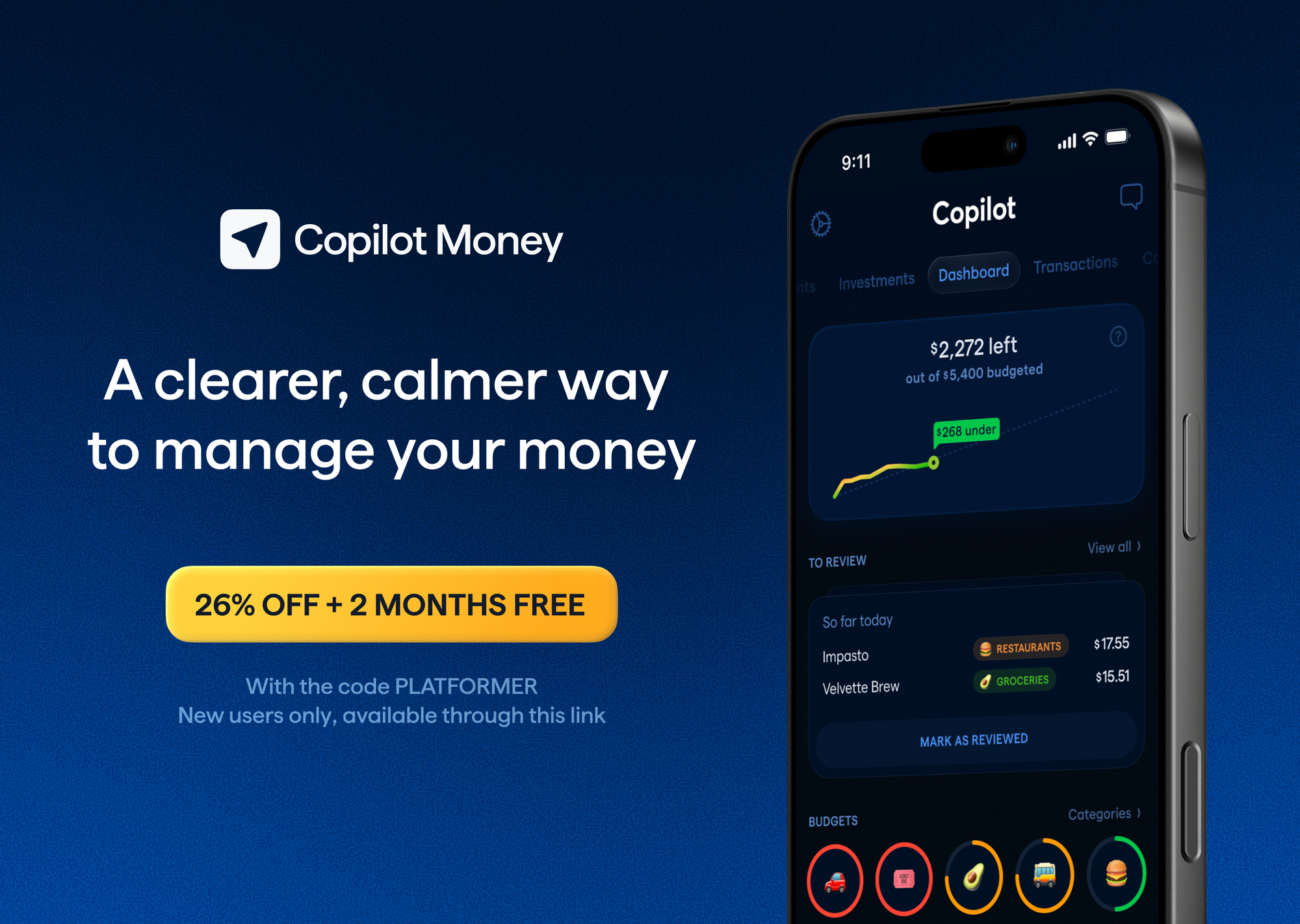
Getting a clear picture of your finances shouldn’t require jumping between bank apps and spreadsheets. Copilot Money brings all your accounts, budgets, and investments into one organized dashboard, and seamlessly syncs across iPhone, iPad, Mac, and the web.
With AI-powered categorization, real-time updates, and an Apple Design Award nomination, Copilot Money gives you the cleanest, clearest view of your money. It’s part of why the app holds a 4.8 rating from more than 25,000 reviews.
Copilot Money helps you:
● See your spending clearly, without manual tracking
● Understand trends across accounts
● Catch unusual charges automatically
● Stay organized across all your devices
Platformer readers get 26% off your first year + 2 free months with code PLATFORMER only at the below link.
Following
The TikTok sale is finally happening
What happened: The TikTok sale is officially set to close next month on Jan. 22, 2026, with a consortium of American investors, a joint venture set up as TikTok USDS Joint Venture LLC, set to take over the US operations of the social platform. Both TikTok and ByteDance agreed to the deal backed by President Trump, according to an internal memo sent by CEO Shou Chew.
Here’s the ownership breakdown: Oracle, Silver Lake, and Abu Dhabi’s state investment firm MGX, will collectively own 45% of the company; 30% will be “held by affiliates of certain existing investors of ByteDance”; nearly 20% will still be owned by ByteDance; and 5% will be owned by new investors. It is unclear whether the Murdochs, who Trump previously indicated could be part of the group, will have any stake.
The deal also includes “retraining the content recommendation algorithm on U.S. user data to ensure the content feed is free from outside manipulation,” Chew wrote. Oracle will oversee data protection.
Why we’re following: The never-ending TikTok saga appears to finally be reaching its conclusion. And the conclusion is a unique business arrangement that could give the US government — and Trump — ongoing influence over one of the most popular social media apps used by millions of Americans.
What people are saying: Trump has been open about what he thinks the new TikTok should look like. “If I could make it 100% MAGA, I would,” he said in September. “But it’s not going to work out that way, unfortunately. Everyone’s going to be treated fairly — every group, every philosophy, every policy will be treated very fairly.”
While many have been worried about China’s influence on Americans through TikTok, some are also wondering what the new deal means for Oracle centibillionaire Larry Ellison, a Trump friend who has been quietly amassing a media empire, and who has backed his son David Ellison’s quest to bring Warner Bros under Paramount’s ownership. “A lot of people are obviously worried about what Xi Jinping might want Americans to see,” Jim Secreto, a former Treasury official under Biden, told Bloomberg. “But there are also many Americans that might be worried about what Larry Ellison wants them to see.”
—Lindsey Choo
Meta's link tax
What happened: Meta is testing a limit on the number of links that some people can post to Facebook.
Some users started noticing that they couldn’t post links without upgrading their accounts over the past few days. Meta confirmed the experiment. They’re testing it on professional accounts and Facebook Pages, which can post more links if they pay for a Meta Verified subscription.
“This is a limited test to understand whether the ability to publish an increased volume of posts with links adds additional value for Meta Verified subscribers,” a Meta spokesperson told TechCrunch.
Why we’re following: Meta’s messaging here is quite funny, considering the current test involves subtracting value from non-Verified subscribers. There may be good reasons to force frequent posters to pay for the privilege, though we suspect $15 a month won't be enough to keep the spammers away. In the meantime, though, it's a more-than-subtle suggestion to creators that they (and Meta) are better off posting natively to Meta's platforms and not trying to regularly send people away.
It’s the latest in a long line of platform decisions to demote or block links as they attempt to keep users inside their walled gardens. That's bad news for independent creators and the open web, which rely on traffic from social media for views and revenue. And it's more than a little ironic, given how much Meta (justly) complained when Canada attempted to implement its own link tax on the platform.
What people are saying: Some saw the move as a classic story of enshittification: “lol the big tech platforms have replaced the open web for one where you have to pay $15/month to try to make a hyperlink,” wrote Bloomberg Businessweek columnist Max Chafkin.
“For creators it reinforces a pretty brutal reality that Facebook is no longer a reliable traffic engine and Meta is increasingly nudging it away from people trying to use it as one,” social media consultant Matt Navarra told the BBC.
—Ella Markianos and Lindsey Choo
Side Quests
Trump Media and fusion power company TAE Technologies agreed to merge at a valuation of more than $6 billion. To have any hope of understanding this, you must simply read Matt Levine.
A look inside China’s “Manhattan Project” to build AI chips rivaling the US. PDD Holdings reportedly fired a government relations team after a fistfight broke out between employees and Chinese regulators (following another fistfight earlier this month!).
OpenAI has reportedly held talks to raise tens of billions — targeting a $100 billion fundraise that could value it at as much as $830 billion. Developers can now submit apps to ChatGPT. OpenAI has sold more than 700,000 ChatGPT licenses to about 35 public universities. GPT-5.2-Codex is released. OpenAI, Google and Perplexity are increasingly handing out incentives to attract more AI users in India. How OpenAI’s organizational issues may be hurting ChatGPT’s performance.
The ShinyHunters hacking group is extorting PornHub after data from Premium members was reportedly stolen.
Two dozen AI companies, including OpenAI, Microsoft and Google are joining the US’s “Genesis Mission,” which as far as I can tell is a series of press releases about American competitiveness. The FTC is reportedly probing Instacart over its AI pricing tool. FCC chair Brendan Carr said the agency is no longer independent, and the word has been removed from the agency’s mission statement. Great.
Anthropic is releasing its Agent Skills technology as an open standard. An experiment in which Claude ran a vending machine produces an all-timer of a video from Joanna Stern.
Google sued a Chinese scam group Darcula (sic) alleging the group is responsible for a big wave of text scams. Google’s vibe-coding tool Opal is coming to Gemini. The new Gemini 3 Flash is rolling out to the Gemini app, and will be its default mode. YouTube is pulling its data from Billboard in response a change in Billboard’s ranking formula. The Oscars will be broadcast on YouTube starting in 2029. YouTube shut down two prominent channels that post AI-generated movie trailers.
The parents of a teen sextortion victim sued Meta in the first UK case of its kind. Meta is adopting a new age-checking system. Meta paused its initiative to develop third-party Horizon OS headsets. It’s developing a new image and video-focused AI model codenamed “Mango.”
Yann LeCun is reportedly in early talks to raise €500 million for his new startup at a valuation of €3 billion. He plans to bring on a guy named LeBrun as chief executive, and that's beautiful to us.
Apple changed its App Store in Japan to comply with new laws, including the option for alternative app marketplaces. But the changes weren’t enough for Epic CEO Tim Sweeney — Fortnite will not be on iOS in Japan this year, he said, due to Apple's “junk fees.” Speaking of which: Apple is adding more ads to App Store search results.
Amazon AI chief Rohit Prasad is leaving, and will be replaced by cloud infrastructure exec Peter DeSantis. Amazon caught a North Korean IT worker by tracking keystroke data (cool). The Alexa.com website is actually useful now.
How Hollywood is trying to cash in on the popularity of Roblox (and why Disney is keeping its distance). 18 entertainment industry insiders are forming the Creators Coalition on AI.
AI models are making it more possible for amateurs to recreate viruses from scratch, a new report said. New estimates suggest AI created as much pollution as New York City this year, and used up as much water as people consume globally in water bottles.
Those good posts
For more good posts every day, follow Casey’s Instagram stories.
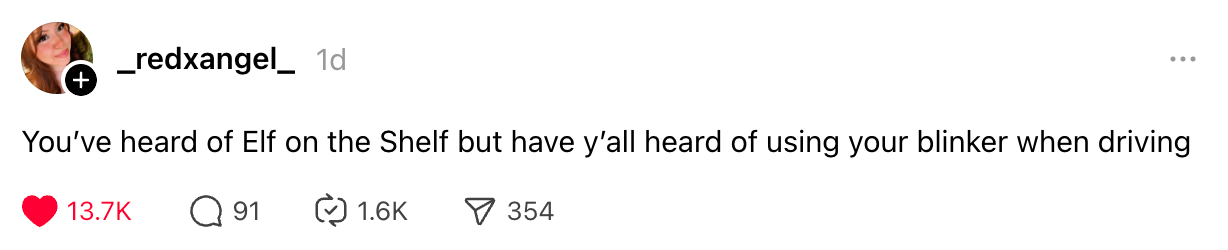
(Link)

(Link)
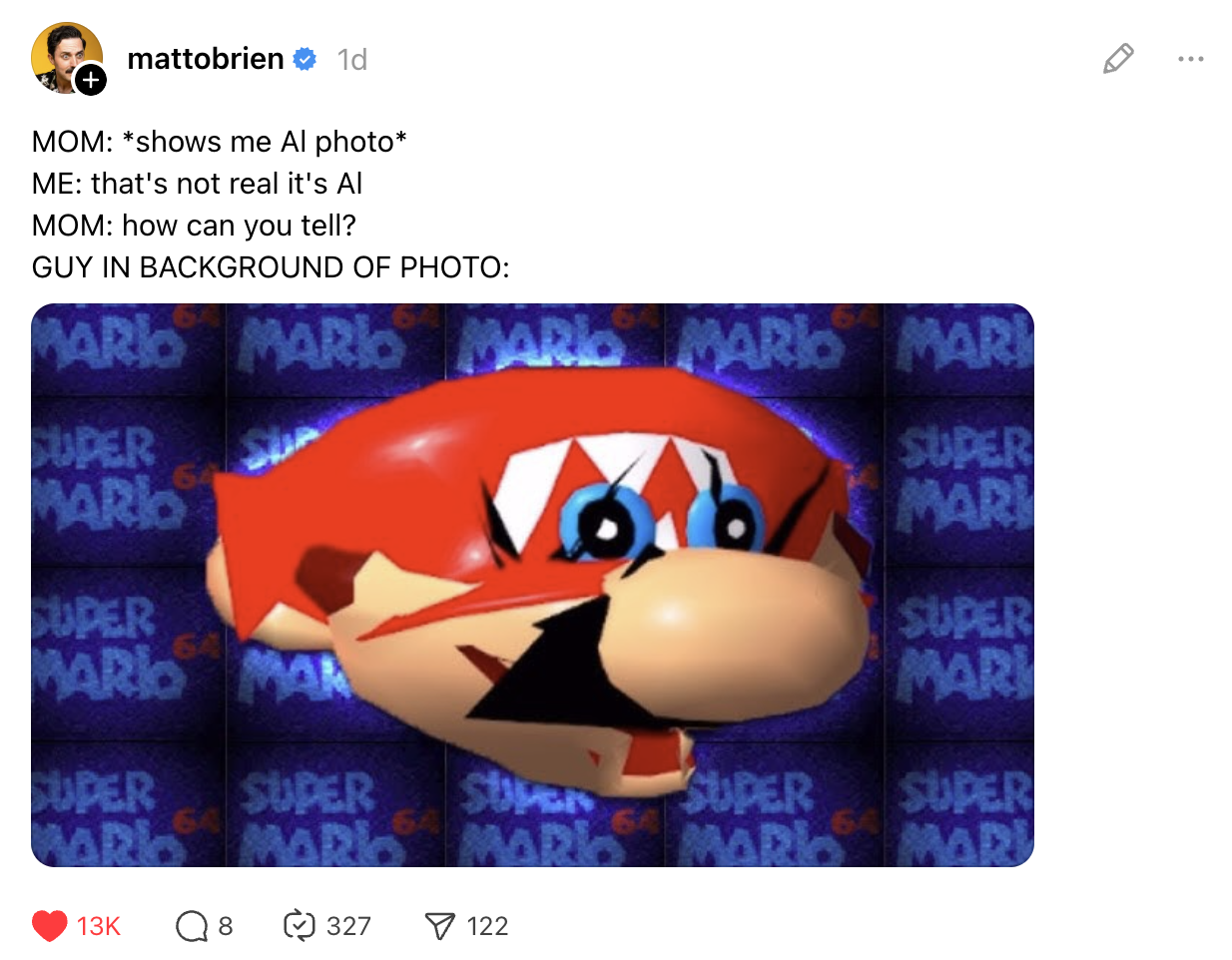
(Link)
Talk to us
Send us tips, comments, questions, and predictions: casey@platformer.news. Read our ethics policy here.