How to help knowledge workers who lose their jobs to AI
Brookings Institution researcher Molly Kinder on why she's leaving her job to create solution for AI's "messy middle." PLUS: Claude Fable arrives

This is an interview about AI. My fiancé works at Anthropic. See my full ethics disclosure here.
Last week in our series on AI and jobs, labor economist Kathryn Anne Edwards explained why the United States' weak social safety net makes the prospect of AI-related job displacement quite worrisome. (Edwards doesn't believe AI will create a new permanent idle class, but acknowledges that the balance of how many jobs it destroys versus how many it might create remains deeply uncertain.)
This week, I wanted to talk to another person who has deeply considered the question of AI and jobs — and come to her own conclusions about how the coming disruption might play out.
Molly Kinder has spent the past three years at the Brookings Institution leading a multiyear project on how generative AI is transforming work. In a recent widely discussed essay, she predicted the coming of what she calls the "messy middle:" a long, hard period between the mostly intact labor market we see today (which she calls "reality 1" and the post-AGI abundance that Silicon Valley promises to someday deliver ("reality 3"). In the messy middle — "reality 2" — most jobs will survive, but losses will be concentrated in some of the best-paid, most coveted jobs in the economy. Whatever happens next, Kinder argues, we should expect those concentrated losses to be "politically explosive."
After all, Kinder told me, the workers most at risk in the near future are the ones who fared best in earlier waves of automation: the laptop class. "If you can do your job locked in a closet with a computer, eventually you're probably going to be in trouble," Kinder says. It's a striking inversion of the pandemic, when the people who could work from home were the safest — and the essential workers who couldn't were the most exposed.
That inversion is also why (like Edwards) Kinder rejects a standard San Francisco answer for AI job loss, which is to skip straight to universal basic income. If everyone gets a check big enough to replace a displaced software engineer's salary, she asks, why would anyone keep showing up to police the streets, build houses, or staff hospitals? "You've just destroyed the labor market," she told me.
Instead, Kinder is focused on more targeted interventions: policies that slow and manage the pace of displacement, including a workforce reinvestment fund that would require companies cutting young workers to pay for white-collar apprenticeships; wage insurance for older workers; and, if good jobs truly grow scarce, a public effort to create them — a new industrial policy for knowledge workers.
Kinder also came to the podcast with some news: after three years at Brookings, she's leaving to start a new organization devoted to solving the problems of the AI transition.
Highlights of our conversation are below, edited for clarity and length. Listen to the entire conversation wherever you get your podcasts — just search for Platformer — or watch it on YouTube at youtube.com/caseynewton.
And let us know what you think — we're new to podcast production, and welcome your feedback at casey@platformer.news.
Casey Newton: You wrote a piece recently about what you call the "messy middle" of the AI transition. What is the messy middle?
Molly Kinder: I wrote this piece in part because I've been so frustrated by the state of the AI and jobs conversation. We're in this giant seesaw where one group of people will put something out that declares an apocalypse is coming and takes a really extreme view, and then the other side will say, "No, the apocalypse isn't coming, so there's nothing to see here." We go from really extreme — all jobs are going away very soon, and that's awful — to: you're overreacting, there's nothing to see here.
I'm calling out the messy middle both to stake out a more reasonable middle ground between these two extremes, but also to talk about a time period. We're in such early days of this labor market transition that you almost can't see much evidence of labor market disruption yet. Everyone's fearful, but we're not yet seeing a lot of labor market impact. Reality 3 — and credit to my colleague Palak Shah for coming up with this R1, R2, R3 framing — is what I think a lot of Silicon Valley describes: this world of post-AGI where essentially robots and AI can do everything. That's the jobs apocalypse narrative that we're debating over and over whether it's realistic.
I think what we're really entering is this messy middle period. It's a world in which AI gets better and it's more capable of taking on more work, but we don't overnight see a jobs apocalypse. Instead, we find something that's still painful, but more narrow. It's a world of partial automation, where AI starts to get capable enough to do certain types of jobs, and that is still very painful. A world where most jobs are intact but there's a concentrated loss is still a world that is politically, societally, and economically explosive. So I'm trying to call attention to this messy middle period, which could last for decades, depending on how good the technology gets. Even in a world where we don't see a full jobs apocalypse, if we're seeing a lot of pain in the knowledge sector or early career, that is still going to be something that we feel as a country — and that we're not prepared for.
Newton: You argue that this middle period of AI disruption is going to hit white-collar workers much harder than blue-collar workers. Make the case for why you think that is.
Kinder: This is just what is going to go first. When you look at ChatGPT and large language models, we've got lots of data. OpenAI made public a dataset that looked at every task across the economy and its task exposure. You can aggregate that up to individual jobs and individual sectors, and it's basically saying: is this the kind of job where you can use a version of ChatGPT to save a bunch of time?
If you look at the kinds of sectors that are most exposed, where we're going to see the most usage — for good or bad, in terms of job security — it is by and large the knowledge sectors. My framing is: if you can do your job locked in a closet with a computer, eventually you're probably going to be in trouble. It's the really computer-based work. Most of that is bachelor's degrees — law, finance, consulting, sales. There's a big component of it that's more clerical, back office, that's not usually associated with a BA.
What you see as not really that exposed — and it's reflected in the usage data — are blue-collar jobs, physical jobs, service-sector jobs. Jobs where you have to show up in a workplace, whether it's a restaurant or a hair salon or a repair shop. Those are jobs where ChatGPT is not really going to help you do very much. Eventually we're certainly going to see robotics enter the picture, but I think we're seeing much faster advancements in computer-based knowledge work. So that's what I see as the frontier. I think that's going to hit and be disruptive first to those computer-based knowledge jobs and that clerical role.
Newton: Can you sketch out some of the implications of white-collar work falling to automation first, and how that might contribute to messiness?
Molly Kinder: Let me first give a little historical perspective to show why this is such a change if it does happen. And I want to caveat: I don't have a crystal ball. Nobody can fully predict the future. There are lots of ways the impacts on white-collar work may be softer than I imagine. I'm also not saying it's all happening tomorrow. I think we're at the precipice of a transformation — the possibility of commoditizing cognition is something I talk about in the paper. It's not overnight. This is, though, where I see the technology going.
In the paper, I show a figure that goes back 150 years and looks at what types of jobs dominated the labor market in the US over time. Since I was born, around 1980, you see this huge surge of knowledge and professional jobs — the kind of white-collar jobs that dominate the economy now, in business and finance and accounting and law. Before that, there was an agricultural revolution, and that was mechanized. Then we had tons of blue-collar employment — upwards of a third of all employment was in manufacturing and blue-collar work. Then we saw this big decline.
We've had this huge increase in knowledge jobs since basically the invention of the computer. We've called this skill-biased technological change. Up until the moment ChatGPT was launched, I always considered computers as boosting the knowledge worker — it made them more productive and more in demand. But the computer didn't do my job. My brain did my job.
In comparison, a lot of jobs that have gone away were substituted by computers. If you think about a lawyer in the 1980s, you probably had one lawyer and one legal secretary. The legal secretary did all the typing, all the scheduling, the dictation. Computers came along and replaced a lot of that work. And it made the lawyer more productive and more in demand. So we've had this period where routine jobs in the middle were being displaced, but knowledge jobs were growing. They were the winners of the computer era.
ChatGPT and technology like it — large language models — potentially could flip that on its head. For the first time — and it's not totally there yet, but Casey, you and I feel it in our knowledge jobs — what if the tenth version of Claude... where are we going to be in five years? Can it now lawyer? Before, computers helped the lawyer be the brilliant mind and do the work faster and with more resources. Are we going to get to a point where the computer itself, through these technologies, actually can substitute for some of that cognition that was so specialized? We have not seen that before. That's not the way technology has gone over the last several decades.
If that does happen, I think it can be earth-shattering. We have this notion of an American dream, this meritocracy. My grandparents were uneducated immigrants from Ireland; their passion was to work blue-collar jobs and send their kids to college, and then they all owned homes. This is the path we have. There has been a sense that it's worth it to take out a ton of debt for college because you have this secure upper-middle-class existence if you do. This could upend all of that. Not all of it, because I think there are versions of some of these jobs that will be boosted. But if we really start to see the technology capable of commoditizing some of that cognition, I think we have an explosive situation on our hands — if the jobs that are rising aren't the same pay and stature and eligibility as the jobs that are going away. And I think we have some precedent in history, with manufacturing, to learn that lesson.
Newton: To some degree this has already started to arrive, right? We see the boos at commencement speakers when the mention of AI comes up — boos rooted in the fear that I'm not going to be able to achieve the American dream anymore. In a very real way, nothing that you said is even really that speculative.
Kinder: It's not that speculative. And the point is, I'm not saying we're there today. We're in the earliest innings of this marathon. But where we think we're going, if the labs are right, is that these versions are going to continue to get smarter and smarter, and they're going to rival a professor, a think tank scholar, a market research analyst, a lawyer, a doctor diagnosing a disease. These are some of the most coveted jobs across the entire economy.
I've interviewed so many young people, in college and after, who are terribly fearful of this. You have to take into account where we are as a country. Affordability is everyone's anxiety. Because of the hollowing out of those middle-class jobs in manufacturing and clerical work, the best way you can afford a home and raise a family is typically these college-educated routes to upper-middle-class jobs. And these are coveted jobs, jobs people want. This isn't "I'll reduce my drudgery." Young people are telling me, "Look, it's already so preposterously expensive to afford a home. I'm doing everything I was told to do. I'm studying hard, I'm getting good grades, I'm choosing majors that should put me on this path to one day afford the basics of the American dream. Is AI going to come in and rip that away from me?"
So I think there's a lot of anxiety that if we take away the jobs people want, what is going to be left over? Sure, there's a possibility new jobs come online; maybe it won't be so hard to switch. But fundamentally, what people want is the ability to provide for themselves and their family and have some hope that their kids are going to do better than them. There's a lot of anxiety about AI because of the potential for it, in the coming years, to really disrupt the American dream.
Newton: A previous guest on this show, Google's James Manyika, might tell us to tap the brakes a little bit. A lot of James's research tries to tease out the difference between automating a task and automating a job. Tasks are definitely getting easier to automate — and yet we still have our jobs. He seems to think this will play out over a pretty long time, and that the economy will be less susceptible to mass automation of white-collar work in the near term. What do you make of that critique?
Molly Kinder: First, I really respect James. Some of what James said I agreed with, and some I disagreed with. There are certainly aspects of knowledge work that are not terribly automatable. Parts of my job are very relationship-based — being physically present, speaking, fundraising, building partnerships. Those types of tasks are not automatable anytime in the near future. I do think there are some instances where, as some of your work gets automated, you just go to a higher level of abstraction. There are also demand issues: maybe if lawyers get very productive and it all becomes cheaper, we demand more. All of those things, I think, are true.
Part of what I think was missing is: project ourselves out a few years. We are still talking about the early days. Of course every doctor wants to save time on note-taking. That's not why doctors are fearful for their jobs. What strikes fear in doctors or nurses is: is AI going to get good at the part of my job that I think of as the crux of my job, where I really add value? There hasn't been an academic study yet where the human bests AI in diagnosing a disease. There are lots of examples in the medical profession of AI being better at doing the hardest parts — the stuff that doctors enjoy the most. That's not the same thing as saying, let's just get rid of the routine part of our job and do more of the good parts. When I talk to creatives, they're worried about the thing they love about their job being substituted.
Even for me — I'm 46 now, I'm very senior, and I have a lot of interpersonal parts of my job. I didn't for the first 15 years of my career. It was mostly sitting at a computer and typing. What a lot of people fear is not where we are today in this trajectory. If AI gets better and better at what makes you special in your job, and what you love — does it mean all jobs are going away? I think in certain realms, it's going to be very automating.
Newton: I think this accounts for 85 percent of the uncertainty around this conversation. It is basically impossible to predict the future when you are living through exponential change — the ground keeps shifting underneath you. If you work at a technology company, your incentive is to tell me, "No, no, Casey, don't worry, it's going to be fine. Yes, there's going to be a lot of change, but you are going to keep your job, so you can calm down — you don't have to try to destroy the data center we're building in your community, you don't have to boo us at graduation." But I think what's important about what you're saying is that if the technology improves rapidly enough, that jagged frontier is going to catch up to a staggering amount of tasks, at least — and at some point that probably tips over into a full job.
Molly Kinder: There are so many different types of jobs out there, and the way AI is going to impact jobs is going to be very different in different sectors.
Another thing that I worry about is this idea of de-skilling. If the really hard cognitive part of your job can be deferred to Claude, you might not need as much education or experience, and that becomes a lower-paying job. That's something I'm already hearing in the healthcare space. I've heard examples from doctors of a completely untrained person off the street being guided by generative AI to perform an ultrasound. That's an $85,000-a-year job that requires a year of post-secondary education.
I don't think we are heading into a jobs apocalypse right now. My use of AI makes me better at my job. I think there are lots of upsides. But the notion that there's nothing to see here just because we're not heading into a jobs apocalypse... It won't take that much if a handful of really coveted sectors start seeing a displacement of some talent. The whole public is on pins and needles. Everyone's worried about this. They're looking for the first real proof that what they fear in their gut is coming.
If policymakers and politicians are not ready with a response — if people see that this is going to be a repeat of social media, where kids were harmed for 10 years with nothing, or a repeat of deindustrialization, where good jobs in the heartland were lost and we did basically nothing — I think people are going to lose faith, and they're going to turn even more against AI. It's imperative that — you've said it many times, Casey — what's the plan? If you lose a job where you were making $200,000 a year, and you're very specialized and you can't just slip into something else, your fall from that livelihood — your home mortgage, what you're able to do to support your family — could be pretty precipitous. We have a really threadbare safety net.
Newton: You open your piece by describing interactions you had with two people: someone who was almost 50, a former USAID official who was looking at a 60 percent pay cut to become a teacher after DOGE took away her job; and a 60-something laid-off semiconductor engineer who was driving your Uber to Menlo Park, and whose job may itself be disrupted before too long by Waymo. What about those interactions made you feel like these could be leading indicators of what we're about to see?
Kinder: I use those as examples of how challenging it will be if we do see impacts in the white-collar sector. Neither of them lost their job because of AI, but they're the type of white-collar workers who, if we start seeing impacts there, reveal how challenging this is going to be. They had very specialized skill sets. When my neighbor and friend who worked for USAID lost her job, that entire sector was dismantled by DOGE. Everyone is having a hard time. Many had to move to cheaper cities, take big pay cuts. A lot of people haven't found another job. There are people managing restaurants, trying to totally repurpose into something else. She really struggled to find anything where her skills could translate.
The semiconductor engineer really felt he was facing age discrimination, and from his stories I would give a lot of credence to that. Both of them had salaries that were about $200,000. It's really tough to maintain that standard of living if you don't find something equivalent. Both of them were deeply struggling to do that, and they were ending up in places where the delta between their previous salary and where they were was enormous. The Uber driver was now making between $30,000 and $40,000 a year — he couldn't even pay his COBRA. Massive sacrifice. And at that age, in his 60s, still five years before he could retire — what is retraining? Are you really going to retrain?
This friend, who's closer to my age, who has kids, is ensconced in the neighborhood; it would be a big change for her family. The best she could come up with: Virginia has a program where, with a BA, you can basically become a teacher. But it would be a 60 percent pay cut. What I'm trying to emphasize here is that this is not easy. I don't have a crystal ball, but imagine a world in four or five years, if these technologies get better and they're general-purpose: if people with specialized knowledge careers are displaced, how easy is it going to be for them to switch into something else? Our safety net is terrible. There is no unwritten rule that says you get to get another job at the same pay. Imagine if that repeats over enough people. It doesn't have to be a jobs apocalypse for people to feel that what they hold dear is slipping away.
Newton: Let's talk about an idea that you don't like, which is universal basic income. Why not UBI?
Molly Kinder: What I was reacting to was the San Francisco consensus I hear when I'm in conversation with someone who's very AGI-pilled and thinks we're going right to that post-AGI reality. When I say my job is to think about policy solutions in this interim period — what do we do about young people who need to get on the career ladder, or these displaced knowledge workers? — they say, "Well, no, we just go straight to UBI. We get checks big enough for everybody that replace essentially their entire income, and it's universal — everyone gets it."
That's partly my motivation for writing this piece. What if we're not skipping right to a world where nobody works and the answer is everyone gets a check? What if instead you're in the messy middle, where some jobs are disrupted and you have this concentrated pain? The historical parallel is the 1980s through the 2000s, when we lost manufacturing jobs in the heartland in a concentrated way. Overall, the economy was fine, and overall, jobs were fine. You just had this concentrated loss in the heartland.
I use the example of COVID because the people who can do their job locked in a closet with a computer are the folks who could stay home during the pandemic. I researched essential workers at Brookings during the pandemic — I spent all my time with grocery workers and care workers, arguing that they deserved a living wage and safety. The folks who had to show up at the office or a restaurant or a hospital — almost by definition, computers can't do those jobs, because you had to be in person. The folks who were the most safe from the virus, who could take all their meetings at home virtually or were mostly typing on a spreadsheet — those are the things that AI is best at.
What we just learned in this last decade was that the economy literally cannot function without all of those tens of millions of people showing up in hospitals and telephone repair and food manufacturing and farming and public safety and schooling. Critical infrastructure is by and large not on the front lines of AI displacement in the early days. I can't predict if robots are going to suddenly take over everything. It's the laptop class — the people who were not declared essential — who are the most at risk.
If everyone in society gets a check large enough to replace their lost wages, why in the world would anybody show up to still do the policing, the construction of the house, the hospital jobs, for way less money than that? We live in a country — I don't agree with this value, but we live in a country — where distributing checks for people not to work tends not to be very favorable. How politically sustainable is it for all the folks with essential jobs earning quite modest wages to keep working for $40,000 or $60,000 a year while we send checks in perpetuity to the $200,000 software engineer doing no work? It's not that I don't think we need to have some kind of compensation. It's the idea that we can just give checks large enough to replace everyone's income in a world that's the messy middle. You've just destroyed the labor market. So I think what we need are more targeted interventions. If we do get to a Reality 3 where literally no one works, of course we need some kind of full income replacement. But I think we're facing something much trickier in the messy middle.
Newton: Well, let's talk about some good ideas to handle the job disruptions that may come. You outline a few in your piece. What are you looking at that seems promising?
Molly Kinder: I have a few categories that I'm playing with. I've been really impressed with some of David Autor's polling that shows where the American people are. When I talk to the American public, I hear anxiety that comes in threefold. One is people already in their working lives, like you and me, Casey, who worry about a game of Russian roulette: am I going to be the person who one day wakes up and some version of Claude can do my job? There's a real anxiety about fragility. The second is young people, who are super fearful that the American dream is just being pulled away — that they're the collateral damage of AI progress. Shareholders could benefit if you replace young people with Claude, but what happens to those young people? And then, as a parent of three kids 11 and under, I'd say a lot of parents are bewildered: how do we even prepare our kids for the future? What even is the point of school? What do we do to set our kids up?
So there's a lot of uncertainty and a lot of fear. And what's riding through this is that people are not asking for a check, and they're not asking for retraining. They're asking to have some security in a world where things are really expensive. They want to keep a job. So the first bucket, I would say, is: what are really creative policy interventions that slow down and manage the pace of disruption before it even happens? We are really bad as a country, once the displacement happens, at figuring out what to do. I don't believe in just putting up protectionist walls. But I do believe there are ways that we can better manage this — have higher expectations for employers in terms of retention, or how much they have to do to try to repurpose someone before that person loses their job.
I think the same holds for young people. I am passionate about ideas that make sure young people are just not the collateral damage. How can we hold employers accountable for not just cutting learning opportunities because they can? I have this idea for a workforce reinvestment fund: sectors that are cutting young people have to pay in, and you only get the money back if you offer some kind of white-collar apprenticeship for young people. I was really excited to see that Mallory McMorrow in Michigan just made that part of her big campaign for Senate. David Autor ran the polling for me — it's wildly popular. How can you change the incentives, through tax, through regulations, so we're not just burning through people? The more we can manage that pace, the better.
The second thing is that we really have to fix the safety net. It's clear that we don't do a good job. There are lots of ideas on the table. I believe wage insurance for older people is a must. We're going to have to be a lot more generous. As you get older, it's much harder to transition; wage insurance basically gives you a way to take another job at a lower rate but still keep some of your previous wage.
The third thing is one that no one is really talking about, but this is where my mind is going, including from the Pope's encyclical and some of the guidance about how work is essential. If we really see a pretty serious disruption to white-collar jobs, and we're not seeing the market just create more jobs at that level — if we might see more service jobs, but we really have a dearth of good jobs — I think government's going to have to figure out some way to provide good jobs. We have industrial policy to try to create infrastructure jobs to help men who lost jobs in manufacturing. What's the version of that for white-collar work? It could be jobs solving social problems. We've got plenty of problems to solve. We can decide we want to tackle them — but at what wage, through what mechanism? Something I want to do in my new organization is a lot of experimentation and testing around that.
And then the final bucket: I think we have some really big questions around inequality. How are we going to capture some of this surplus to reinvest, to make sure we're creating good jobs and we have a better safety net — whether it's the healthcare people need or more free apprenticeships? There are a lot of big ideas we have to figure out in terms of how we make sure that the upside is shared and we can actually fund it.
Newton: We always try to break news on the Platformer pod, and you mentioned that you might have a new organization. What can you tell us about what you're up to, Molly?
Kinder: For the last three years, I've had this wonderful perch at the Brookings Institution, and it's allowed me to go really deep and study how these new forms of AI are impacting jobs. I've been able to get out and talk to people. I've been to the Vatican twice. I've convened economists. I've talked with policymakers. It's been amazing, but my anxiety levels have just kept going up as I watch the METR charts and as I see this is going so much faster than even I thought three years ago.
What I observe is angst everywhere. The public is anxious. Politicians are suddenly realizing they need a plan, and they don't know what to do. We're drowning in analysis. Everyone's debating what is happening now, but we're really short on answers. What is the plan? When I'm in a think tank capacity, I feel I'm in the conversation but somewhat on the sidelines. I look at my three kids and I think: this is too important. I have to give everything I have to trying to not study this but solve it.
I can't announce all the details, but I will say that the spirit of my next chapter is to be dogged and urgent and put everything into figuring out what we do about this — how we make sure that in this transition, especially this next messy middle, we learn from our past mistakes and we actually grip this head-on. So, Casey, have me back on the pod in a few months, and I'm happy to formally tell you our name and exactly our plan. But you're my first tell — this is actually the last day of my job, and I take the plunge tomorrow. So thanks for being here to celebrate with me.

Following
Anthropic releases Claude Fable
What happened: Anthropic launched Claude Fable 5, the first “Mythos-class” model they’ve released to the public.
Anthropic considered the original Claude Mythos too dangerous to release, making it available only to select cyber defenders in April. While some critics dismissed this as “fear-based marketing,” partner companies found Claude Mythos Preview highly capable at generating novel exploits — Firefox reported increasing their bug fixes from 76 in March to 423 in April.
Now Anthropic is releasing Fable 5, a version of Mythos with added guardrails designed to prevent misuse. The company is also releasing a new Mythos model to its Project Glasswing partners and select biology researchers.
To prevent the public from accessing dangerous capabilities, Claude Fable 5 will route cybersecurity, biology, and chemistry questions to Anthropic’s next-most-advanced model, Claude Opus 4.8. Claude will do the same for queries suspected of being distillation attempts.
Anthropic says that because it has “tuned the safeguards to be cautious,” occasionally “benign requests will trigger our classifiers.” They write: “We recognize that this will be frustrating to some users, and our aim is to reduce false positives as we update” the guardrails.
Anthropic says it expects significant demand for Fable 5. As a result, it has created a somewhat arcane rollout plan. From now until June 22, Fable will be included in Pro, Max, Team, and seat-based Enterprise plans. Starting June 23, Fable will require separately purchased usage credits. But eventually, the company will “aim to restore Fable 5 as a standard part of subscription plans,” it said.
Anthropic also changed its data retention policy for Fable and Mythos. The company will now retain traffic data for 30 days to enable investigations related to misuse. The company promised it won’t use that data to train Claude “or for any non-safety-related purpose.”
Why we’re following: Since Mythos’s announcement in April, everyone from LLM power user Discords to the federal government have been itching to get their hands on it. And now, (a slightly weakened version of) it is here.
The model is state-of-the-art on coding benchmarks like SWE-Bench and, and early reviews from companies including Every, Replit and Figma have high praise for its agentic coding abilities.
The larger implications of Fable’s apparent step-change in model functionality won’t be known for some time. To justify its pricing — twice that of Claude Opus 4.8 — it will have to deliver. As usual, though, Anthropic seems more worried about keeping pace with demand for the model.
A more important question is whether the model’s guardrails actually work as intended. This year, a hacker jailbroke a previous Claude model to hack a trove of Mexican government data. Anthropic says its new guardrails are quite cautious, and that red-teaming has found “no universal jailbreaks” of Claude Fable 5.
But these are early days.
What people are saying:
Ethan Mollick, an academic who closely studies AI and often tests models before the general public, gave Fable a rave. “In experiment after experiment I conducted, it outperformed basically every other public model I have used by a considerable margin,” he wrote on his Substack. “It was capable across many problems and produced some startling results — it would work up to a dozen hours executing on multi-page specifications.”
Dan Shipper and Katie Parrott at Every called it “paradigm-shifting,” with Shipper saying it broke the company’s internal benchmarks. But it’s also “very slow,” “expensive,” and “token-hungry,” he said. “Using this thing for regular knowledge work is like squashing an ant with a rocket launcher. It also routinely uses 500k to 1M tokens on tasks.”
Vocal skeptic Gary Marcus, while remaining conspicuously silent about the model’s capabilities, suggested that the entire Mythos saga had been a marketing stunt.
“Claude Mythos went from ‘too dangerous to release” to publicly available (with some extra guard rails) in two months,” he wrote. And y’all fell for Anthropic’s whole routine. Again.”
Those good posts
For more good posts every day, follow Casey’s Instagram stories.
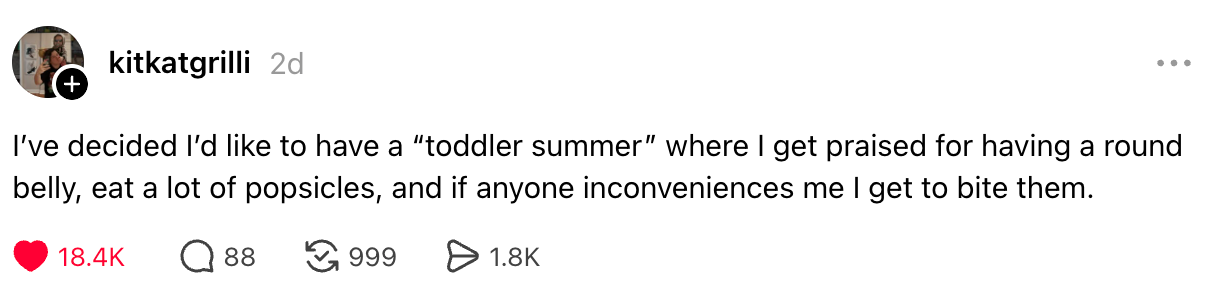
(Link)
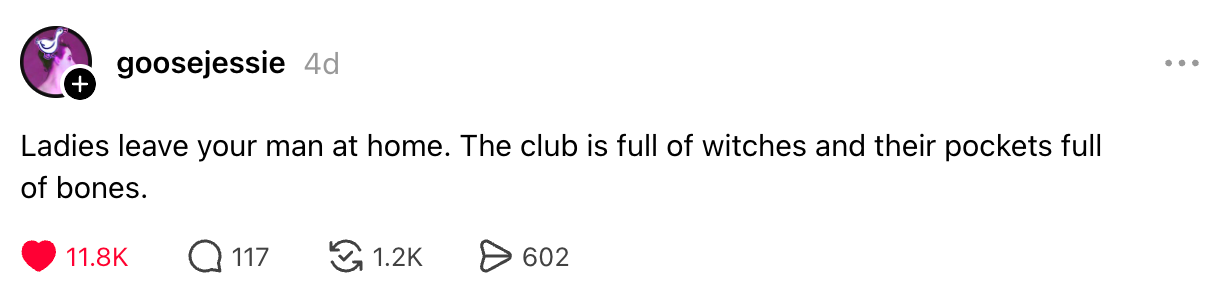
(Link)
(Link)
Talk to us
Send us tips, comments, questions, and solutions to the messy middle: casey@platformer.news. Read our ethics policy here.