How we're shaking up Platformer for the AI era
On newsletters in the age of AI automation. PLUS: Musk and OpenAI in court, and China blocks Meta's Manus acquisition



This column touches on AI. My fiancé works at Anthropic. See my full ethics disclosure here.
I.
As I do most mornings, I began work yesterday by checking my Signal messages. Along with the usual unwanted PR pitches and messages from people in the middle stages of AI psychosis, I had received a genuinely great tip. It was a story squarely in our coverage area that, if properly covered, could draw attention to a pressing issue on tech platforms and put pressure on it to change.
The tip should have filled me with excitement. Instead, though, I felt something closer to dread. When was I going to begin making the many phone calls needed to verify this information? How could I find time to meet a source or two in person? Did I have all the sources I would need, or would I need to somehow develop some more?
Since I began writing a daily newsletter in 2017, I have always faced some version of these pressures. My historical approach has been to report scoops whenever I can, and fill out the rest of the time by writing news analysis — bolstering it whenever I can with extra details of original reporting. As longtime Platformer readers will know, in practice this meant that the balance of what we publish here has leaned toward news analysis. A daily publishing cadence leaves enough time for synthesis and sense-making, but not for deep digging and phone tag.
For most of the past decade, I’ve liked this arrangement. I began writing in the aftermath of the 2016 US presidential election and the growing backlash against tech companies, and the glut of coverage benefited from a publication dedicated to a daily close reading of the news. When I started publishing a roundup of links related to the intersection of tech and democracy, I felt like I was doing something genuinely novel on my beat.
Fast forward to today, and the world of link roundups feels much more crowded. A generation of tech writers filed out of the newsrooms where they grew up and began to write for audiences of their own. Newsletters, which were once an afterthought in media, are now a central pillar of many publishers’ strategies. But the ongoing collapse of the web and related struggles at big media companies means that there is now less tech journalism overall. The need for sense-making is greater than ever, but due to a half-decade of layoffs and shuttered publications, there is less and less journalism to make sense of.
Meanwhile, improvements in artificial intelligence over this year have resulted in systems that further encroach on the work we do here. In January, I wrote about the experience of building an automated daily briefing of link summaries for myself; I have been using it all year to look for story ideas. It does about as good a job as I do in finding stories of interest, and it does so automatically while I sleep.
Link aggregation was never the highest-value work we did here. But I do think that its value has decreased significantly over the past year, and will decline further as more people begin using personal agents to write news digests for them. (Already, it seems that a staggering percentage of Substack posts are AI-generated in whole or part; they are arbitraging the fact that you are not yet doing this yourself.)
And to crawl a bit further out onto a limb, I expect some smaller set of people — but in particular the executives, policy professionals, and communications team that Platformer has long written for — to begin relying on AI for news analysis as well. Over the past year, chatbots have gotten sharper at responding to questions about the implications of this or that news story — how it changes the competitive landscape, for example, or how regulators might respond.
For the moment, chatbots carry far less authority on these subjects than the domain experts who often write paid newsletters about them. But having been a reporter since 2002, my experience has been that the internet is working continuously to deskill and replace you. It doesn’t require much of a leap in imagination on my part to imagine a day where your current lineup of morning and afternoon newsletters is largely replaced by an agent-written briefing that has been exquisitely tuned to your professional concerns — and, unlike this newsletter, instantly respond to your questions about its findings.
If Platformer’s three pillars are original reporting, news analysis, and link aggregation, then, it would seem that one of those has already been commoditized and the second may be on its way.
II.
We've been trying to evolve to keep pace with these changes. But I've come to believe that we need to move faster.
In September, in my annual anniversary post, I mentioned that I wanted to take more time off from writing to report. You all were universally supportive of the move, reminding me that you are paying for quality rather than quantity.
I’m proud of the original reporting we’ve done since: publishing previously unreported internal conversations about Meta’s AI-training spyware; a possible move to defund Meta’s Oversight Board; and OpenAI shuttering its mission alignment team, among others. We’ve also found significant enthusiasm for our first-person experiments in trying to make AI work for us: like this piece on Claude Code for writers, or this one on falling in and out of love with the agent now known as OpenClaw; or this one on Ella Markianos trying to replace herself with a bot.
We’ve done the best we can with the schedule we have. But ultimately, occasional days off the column haven’t been enough to give me what I really want — and what I think will result in the best version of Platformer. That is: the flexibility to leave my desk for several hours at a time; to flesh out stories over days or even weeks; to spend a slow news day reporting rather than trying to cobble together a column.
And so today we’re going to begin an experiment to see what that version of Platformer would look like. Free subscribers can still look forward to one column per week. Paid subscribers will get an additional column on Thursdays that we’re thinking of as a reporter’s notebook: what I’m hearing, what we’re working on, a Hard Fork preview, and a mailbag. Some of these may read like traditional columns; others may feel more formally daring.
Paid subscribers will also get additional stories and analyses from us as we write them. This is the biggest change we’re making: instead of promising to show up on a set schedule, we’re promising to show up when we find out something interesting — or want to help you make sense of the day’s big story on our beat.
In practice, I suspect that there will be many weeks where paid subscribers still hear from us three times a week. But for all of the reasons above, we need to change Platformer so that our schedule serves the journalism. For too long now, it has been the other way around.
We’re making a couple other tweaks. Side Quests, our column-ending grab bag of every single link we found interesting, are going away. Techmeme does this particular job better than we can, and does it 24/7. Going forward, we want to reserve our firepower for when we can move the story forward.
Following, the section we launched in September to brief you on the day’s news along with our own thoughts and commentary from influential people, is sticking around. Readers have told us they really like it, and we’ll continue to send out Following-only editions to paid subscribers to help you make sense of big stories on days when we’re working on other things. You’ll continue to find them after our columns as well.
Finally, we’re working on a big project: a limited-run series of conversations about the future of AI and work that will launch next month across text, audio, and video. The goal is to capture the current uncertainty and simmering conflict between workers and managers that we covered earlier this year in the AI productivity paradox. We’ve got some great talks lined up, and I’m looking forward to sharing more with you all soon. In the meantime, though, it’s a great time to add the Platformer feed to your podcast player of choice.
As always, I’d like to hear what you make of these changes. I’m being sincere when I call this an experiment — we plan to iterate on this new approach over the next couple months, and can always change or revert things based on reader feedback. Truthfully, I find these changes somewhat terrifying, since they replace the conveyor-belt logic of a thrice-weekly column with something wilder and less certain.
But as one brilliant Silicon Valley CEO once put it: only the paranoid survive. In a world where everyone has a take but almost no one has a second source, we’re betting that the value in tech journalism is moving away from aggregation and predictability and toward original reporting and surprise.
Thanks to everyone who has supported Platformer up until this point. And for everyone else, if this next chapter sounds compelling, we’d love you to join us, too.
In the meantime, I've got a tip to run down.

A MESSAGE FROM OUR SPONSOR
Become an AI-native team with Rovo
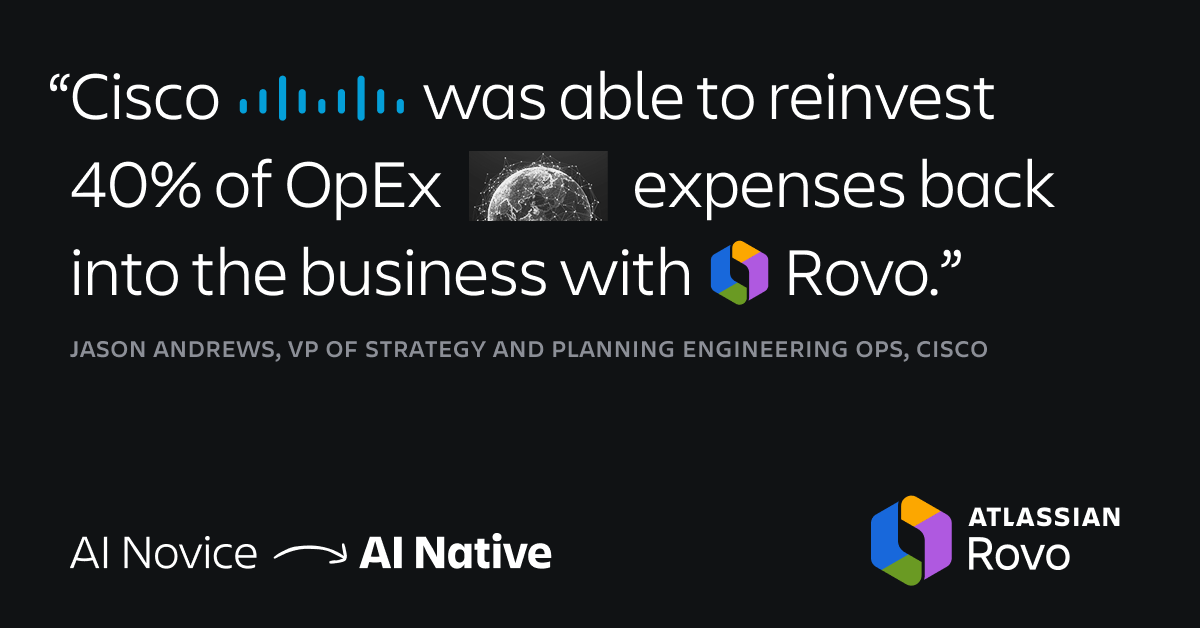
Atlassian Rovo is AI that knows your projects, code, and people so it can bring context (and guardrails) to every workflow.
And because Rovo lives where your teams already work, it doesn’t just find the answers — it helps you do the work.
See how Cisco is becoming an AI-native team with Rovo.
Following
Elon Musk and OpenAI head to court
What happened: Elon Musk’s lawsuit against OpenAI is going to trial. Jury selection finished today; arguments will begin tomorrow. During jury selection, several candidates said they thought ill of Musk for political reasons; at one point in the proceedings, Judge Yvonne Gonzalez Rogers said, “The reality is people don’t like him.”
In the lead-up to the trial, Judge Gonzalez Rogers dismissed Musk’s claims that OpenAI defrauded him. The trial will instead focus on Musk’s breach of charitable trust and unjust enrichment claims.
Musk, who provided OpenAI with some of its initial funding, alleges that he was “assiduously manipulated” and “deceived” by OpenAI. Musk is seeking $150 billion in damages; the proceeds would go to OpenAI’s nonprofit parent.
Why we’re following: The trial is a threat to OpenAI’s hopes of an IPO in the final quarter of 2026. It’s also a culmination of a now years-long feud between Musk and OpenAI CEO Sam Altman. Musk has since founded OpenAI competitor xAI and folded it into SpaceX, which is also set to IPO in 2026.
What people are saying: The two have eagerly been anticipating their day in court. In February, Altman posted on X, “Really excited to get Elon under oath in a few months, Christmas in April!”
On X, Musk has been posting about the trial all day, giving nicknames to his nemeses: “Scam Altman and Greg Stockman stole a charity. Full stop,” he wrote
Musk also boosted the visibility of the New Yorker’s Sam Altman exposé on X, effectively promoting the story into countless feeds.
Elsewhere, OpenAI posted on X: “We can't wait to make our case in court where both the truth and the law are on our side.” The company added, “This lawsuit has always been a baseless and jealous bid to derail a competitor.”
The rest of Elon’s big week: Now that xAI is owned by SpaceX, the whole company may be responsible for Grok’s history of creating CSAM. In a regulatory filing, SpaceX warned that inquiries into sexually abusive AI imagery could hurt the company’s access to foreign markets.
Meanwhile, X is preparing to launch a new financial services tool called “X money."
—Ella Markianos
China blocks Meta’s acquisition of Manus
What happened: China has ordered Meta to unwind its $2 billion acquisition of AI app Manus four months after the deal was announced, taking an unusually aggressive step to block the acquisition of a company that has already moved its entire operation out of China.
The acquisition appeared to be doomed from the start. China’s National Security Commission, led by President Xi Jinping, said shortly after the deal was announced in December that it was a “conspiratorial” attempt to hollow out the country’s technology base, sources told the Financial Times. The opinion led to a multi-agency effort to review the transaction and contain its fallout.
As part of the response to the Meta acquisition, Chinese regulators are also reportedly planning to require domestic tech firms to get government approval before accepting US funding, and have in recent weeks told several private firms to reject US capital in funding rounds unless explicitly approved.
“The transaction complied fully with applicable law. We anticipate an appropriate resolution to the inquiry,” a Meta spokesperson told the FT. Meta has already integrated Manus into some of its tools; unwinding the deal could be complicated.
Why we’re following: The move is setting a precedent for Chinese startups and founders. It doesn’t matter if they move their operations to Singapore to avoid geopolitical scrutiny — a practice known as “Singapore-washing.” They can still be blocked by the Chinese government.
On the other side of these geopolitical tensions, the US on Friday accused Chinese companies, including AI startup DeepSeek, of attempting to steal intellectual property from US AI labs by distilling the output of their frontier large language models.
“AI models developed from surreptitious, unauthorized distillation campaigns enable foreign actors to release products that appear to perform comparably on select benchmarks at a fraction of the cost but do not replicate the full performance of the original system,” a cable from the State Department said.
What people are saying: The blocking of the acquisition is “a reality check for the debate over Chinese investment in the US: Beijing just showed how quickly they can shut the door on the reverse,” wrote Wall Street Journal chief China correspondent Lingling Wei. “Not surprising, but very telling.”
Chris McGuire, a senior fellow for China and emerging technologies at the think tank Council on Foreign Relations, questioned: “Why would any founder start an AI company in China if they had a choice? … Manus did everything right. They even moved their entire business to Singapore to comply with U.S. outbound investment restrictions. Their only mistake was that they originally founded the company in China.”
The crackdown could lure Chinese founders elsewhere, McGuire pointed out. “Meta will be fine without Manus. But Chinese nationals looking to found AI companies will increasingly just start them overseas,” he wrote.
—Lindsey Choo
Those good posts
For more good posts every day, follow Casey’s Instagram stories.
(Link)
(Link)
Talk to us
Send us tips, comments, questions, and feedback on these changes: casey@platformer.news. Read our ethics policy here.