How AI agents "radicalized" a top Meta exec into quitting her job
Clara Shih on how AI will soon displace the first few rungs on the career ladder — and why she left Big Tech to do something about it


This podcast touches on AI. My fiancé works at Anthropic. See my full ethics disclosure here.
Three months ago, we began our podcast miniseries by asking how likely artificial intelligence is to take large numbers of jobs. Our first guest, Box CEO Aaron Levie, argued that mass disruption would be highly unlikely. And several subsequent guests, from Amazon Web Services CEO Matt Garman to labor economist Kathryn Ann Edwards, expressed similar skepticism about a labor wipeout.
The argument has significant emotional appeal — who doesn’t want to believe that technology will create more jobs than it eliminates? And yet I try to apply extra skepticism whenever anyone tells me what I want to hear. Which is why my ears perked up over the past 14 episodes when founders like Wabi’s Eugenia Kuyda told me that she was no longer hiring junior engineers, and Replit CEO Amjad Masad told me the company had begun to replace big enterprise software contracts with home-coded alternatives.
For our final episode, I wanted to speak with someone who has considered the problem from all the major perspectives we’ve covered here from the start: operator, software builder, and civic leader. And that wish led me to Clara Shih.
Shih spent the past two decades building software for some of the world’s biggest tech firms. After early stints at Google and Salesforce, she founded and ran Hearsay Systems for a decade before returning to Salesforce to run Service Cloud. In 2023 she was named CEO of Salesforce AI, where she led the launch of the company’s agent platform, Agentforce. The next year she moved to Meta to build and run its business AI group, making agents that now answer customer messages for businesses on WhatsApp, Messenger and Instagram.
It was while working at Meta last fall that Shih saw something that altered the course of her career. Thanks to the AI agents that the company had recently deployed, a product development process that once required user researchers, designers, product managers, and three kinds of engineers could be reduced into one or two people and a prototype. Shih noticed that the agents were making similar strides in marketing, distribution, and privacy review. And so soon she started taking down entry-level job postings, she told me, because she no longer felt that she needed them.
There remain significant limits to what agents can do — see Katie Paul’s account in Reuters this week of how Mark Zuckerberg’s plan to cut as much as 60 percent of the company this year due to AI efficiencies was derailed by (among other things) underperforming agents.
Still, Shih told me, the experience radicalized her. This spring, she left Meta (though she remains a senior advisor) and started the New Work Foundation, a nonprofit, along with a consumer brand called Dear CC that delivers tools and advice to entry-level workers. Everything the organization makes is free: a podcast in which hiring managers explain what they’re looking for, a data tool called Field Report that shows the AI exposure of different majors and occupations, and a new mentoring app called Game Plan that matches rejected job applicants with peers and a mentor to make the search faster and less lonely.
Most of the builders I spoke to for this series told me that jobs would be fine — they would just be different. Shih is willing to say that the optimistic story she once told herself about her own products — that automating the rote work would free customer support workers for higher-order tasks — has "primarily not been true."
In our conversation, she lays out a three-way taxonomy for how AI reshapes a job, borrowed from MIT economist David Autor; predicts that one in five corporate roles is "especially going to be challenged"; explains why she disagrees with her nonprofit advisor Andrew Yang about universal basic income; and offers a hot take about who will actually do the legal, marketing, and accounting work of the future.
Here's our conversation, lightly edited for clarity and length. Thanks to everyone who listened to the Platformer podcast over the past quarter. With this edition, it comes to a close.
Casey Newton: You've said that last fall, when you were still at Meta, you watched AI agents match and then beat some of your best people on real tasks, and that you felt “radicalized” in that moment when you saw it working. Can you take us into that room with you? What was the task, and what did you see?
Clara Shih: Sure. It feels like just yesterday. It started off in our product design and product development. There was this traditional process of coming up with an idea, doing user research, surveying and interviewing users, then coming up with mockups, then translating that into a project requirements doc, then passing that off to a front-end engineer and a back-end engineer and an ML engineer. We saw all those steps collapse into one or two people being able to ideate in a room, generate the prototype with vibe coding, test it with real users as well as simulated users, and then have a much leaner team of people build that into production. Seeing is believing, and in that moment, I just imagined this amplifying across the economy. We're in for a big ride.
Newton: What you're saying is that seemingly overnight, it was as if that entire stack could be handled by a person or two. Where did your mind go from there? What did you start to think this would mean, both for the company you were at and the broader economy?
Shih: Once you start seeing this pattern — and of course, at a place like Meta, you're under extreme pressure to deliver — you start thinking about how you can apply this to other areas, other bottlenecks, other business processes to help us go faster. So: marketing, distribution, privacy policy. Of course, you've got humans in the loop, experts reviewing the final output. But you're able to collapse what previously took 10 steps and 10 days into a matter of minutes. As we started doing this, I couldn't stop thinking about what this would mean if other companies do this, and you multiply this across an entire economy with many companies, many industries. It's not that this isn't going to be a great place that we land. But what does that transition look like for the people whose jobs are now radically transformed?
Newton: Some people I've talked to have said a variation of, "Well, Casey, it's easy to automate a task, but it's hard to automate a job.” So maybe you can use AI to generate that slide deck now, or send some emails, but you're still going to need that person to navigate the organization and use their critical thinking skills. What do you make of that argument as a reason that people don't need to take AI job disruption that seriously?
Shih: The challenge with any type of new disruption, whether it's AI or previous paradigm shifts, is that the impact is never uniform. There's actually been great research done on this specific topic by David Autor and his lab at MIT. They basically proved that the impact on a job depends on what percentage of the tasks in a job get automated, and also which specific tasks. So there are basically three cases of what can happen.
Case one is if a significant percentage of the tasks get automated, like in translation work, like in customer service. Then we're going to see some direct substitution, just displacement happening — not to 100 percent of the jobs, but to enough where it starts to no longer be a great job to go into or to stay in.
Case two, and this is the happy case, is that what gets automated are the routine tasks. This is what optimists believe — and I want to believe this, and I think that this will happen to certain jobs — where previous bottleneck tasks, like code snippet generation and test case generation, get automated. What ends up happening is that the people who are in the role really do get freed to do higher-order tasks, and then you've got the Jevons paradox as well, and you can see some really great outcomes, such as what happened to software engineers over the last two decades. I think it'll continue, actually, for software engineers as well as radiologists and other types of roles.
Case three is the not-great case, along the lines of case one. Case three is that there are more jobs that are created, but because what the AI automates is the expert tasks, the barrier to entry to getting that job drops very suddenly. This is what happened to taxi drivers with the advent of GPS driving directions, which is the first AI disruption that took place. The combination of GPS driving directions plus rideshare platforms like Uber taking off just flooded the labor supply with lots of drivers. You do have Jevons paradox, so you've got more demand for rides, but at a certain point demand starts to plateau. You still have labor supply coming in, so you do end up creating more jobs, but those jobs are no longer quality jobs. In fact, in metropolitan areas like New York and London, being a driver now, you're making less than a living wage.
Newton: You helped to build a couple of products that are relevant here. Agentforce — Salesforce CEO Marc Benioff said it let the company go from around 9,000 customer support staff to 5,000 people. And Meta's Business AI is a customer service agent that is deployed across WhatsApp and other products, and I think the idea there is that it might reduce those businesses' need for staff. Customer service and support are classic entry-level jobs. When those products were getting built, was there an idea of, hey, this will enable businesses to hire fewer people? Was that part of the conversation, or was that not on y'all's minds?
Shih: I would say it was in the backs of our minds, but we were so excited about building this. And I think at the time, a lot of people — I'll speak for myself — I believed in this happy case that we'll build these products, and people who work in customer support will use Agentforce, they'll use our AI products to automate the rote tasks, and then that'll free them up for complex problem solving and relationship building. I think that has been a little true, but primarily not been true.
Newton: How do you want to help the people being affected? What do you think can be done for them right now?
Shih: The short answer is no one knows. No one has a crystal ball on exactly how this plays out. And of course, young people are not the only people who are being affected by AI. You asked me earlier whether I think this is a product of zero interest rates or macro factors. Certainly those are non-zero contributors. But I think there have been enough studies now isolating those variables that show that AI is directly responsible for a lot of this job loss. And I myself took down entry-level job postings because I was able to use AI and because I was under so much pressure to deliver fast. So I can see this playing out.
What can be done? No one knows for sure, and that's why we have to bring humility and a beginner's mind and a willingness to experiment, and that's really what the New Work Foundation is about.
Newton: The subject that everyone talks about is software engineering and the automation of coding, and I wonder, based on what you've seen in other fields — your Field Report tool flags the legal occupation as having a very high automation risk, despite there being lots of open roles — if we might be too focused on coding. Are we at risk of missing some other signs where we're already starting to see disruption?
Shih: Yes. I actually don't think that software engineers are at risk, because I think that the mindset that you get training in computer science — and I'm biased, but I really think that mindset of thinking in algorithms, thinking in repeatable, reusable modularity — is exactly the skill set that is needed to be able to set up systems of agents and to evaluate their outputs. I actually think the opposite, which is that there are going to be many more software engineers than even the rosiest current predictions, and that software engineers will take over these other jobs: legal, marketing, accounting. That's my hot take.
Newton: I'm curious how you think this winds up changing the shape of organizations and what they hire for. I've been asking a version of this to basically everyone I've spoken to. On one end there are founders like Eugenia Kuyda at Wabi, who basically told me she's only hiring “star athletes” now — the people she wants at her relatively small startup are just absolutely elite. On the other hand, Matt Garman, the CEO of AWS, said replacing junior employees with AI is one of the dumbest things he's ever heard; he thinks there's so much advantage in bringing them into the workplace. You've run very large teams inside two of the biggest software companies in the world. What do you think is going to happen?
Shih: I have a few predictions. One: about one in five roles today within companies are preparing some sort of artifact for someone else in the company to look at. It could be preparing a brief. It could be drafting a slide deck. It could be coming up with an order form that a salesperson then delivers to the customer. I think those roles are especially going to be challenged, because the end person who's ultimately accountable for that outcome and ultimately externally facing — whether it's a salesperson dealing with a customer, or a recruiter working with an external candidate, or a senior legal person who's interfacing with regulators — that person increasingly may find it easier and faster to use AI than to coordinate across multiple of these input-and-output types of roles.
Two is on the junior side. In order to be effective at using AI, you need to have enough domain experience and domain expertise to provide context to get the best response, but then also to be able to review and critique and refine what the AI comes back with. What you don't want are really junior people who have no idea what looks good and what looks bad, where you're giving something to them and they just delegate it to AI, and then they're just passing the AI response back to you — in which case that's not really adding value. That's something we're really focused on with Dear CC: helping young people start to get that hands-on experience working with AI, even in just one domain, so that they understand the art and science of both the prompting and agent setup, as well as the eval and review side on the other end.
Newton: I know it's relatively early in this new project, but I would love to hear about some of the early experiences you've seen among the young people you're working with.
Shih: There are really different stages that people are at. The first stage we want to tackle is that there are a lot of very disillusioned Gen Z grads today. They were promised a bill of goods. These people did everything they thought they were supposed to, and now they're finding themselves — many with college debt to pay off — unable to find the kind of job they went to college for. We see this with all the booing at commencement speeches from Eric Schmidt and others. So the first thing we want to do is address this mindset and this information asymmetry. There are dynamics that those of us who work in AI understand that I believe are important for every young person and every person in the country to understand. Name the problem — and I think that a lot of people, once they have a mental model of what's going on, are going to make smart decisions.
What we've learned — and this is why the community part is so important in what we do — is that when we lean into AI, the temptation is to say, okay, we don't need any humans, we can just create an AI agent as a mentor. No. That is not what people want. The best motivation, the best mentorship comes from conversations like this — in person, over video, building trust, building relationships. So we're connecting people, because these young people feel really lonely and isolated in their search.
What we found in our survey is that by month six of being unemployed, people start to question their own self-worth, their own sense of identity. Many of these young people have been high achievers their whole lives, and all of a sudden there is this rude awakening, and they have parents putting pressure on them, asking why they're doing gig work, not understanding that there's been this broader shift in the job market. So we want to put them with people like them, who can provide support but also be accountability partners as they go through each of the steps in their game plan: updating their LinkedIn profile and resume, knowing which parts to use AI to spruce up versus where not to overuse AI and create spam for these job applications, teaching them how to network, how to have a conversation and reach out to a human hiring manager so they can bypass the AI screening that so many companies have put in place.
Newton: You're approaching this problem from the level of the individual person, and I love having those conversations because they're empowering. But I also believe that we're probably going to need solutions at the government level here — it can't just be left up to every individual to find a path through. I'm curious if you've thought about that, either just for your personal views or as a place you might want to take the nonprofit. Are there policies out there that you like — wage insurance, universal basic income — or things you can imagine yourself lobbying for?
Shih: Absolutely — organizations like the New Work Foundation are not going to solve this on our own, because we have to get every stakeholder group. Government has to take action, because there are policy actions that are required. There are things that employers have to do — maybe government can incentivize employers to do certain things. There are things that higher ed and K-12 have to do, and then there are things that individuals have to do based on personal agency and personal action.
One of my co-founders is Andrew Yang — he's our founding advisor — and he of course has a lot of strong opinions about policy actions. I actually disagree with him. I don't think that universal basic income on its own will address the gap that's widening. And the reason — of course, it's Maslow's hierarchy of needs. First, you have to make sure that people have a living wage. But as humans, we need autonomy, mastery, and purpose, and for 250 years in our society, and for thousands of years before that in Western society, that has come from work. So if work is going to start to change in such dramatic ways, bringing people along means giving them a living wage, but also giving them a sense of purpose.
I don't know exactly what that looks like, but what gives me hope is a project that's been running in my hometown for the last couple of decades. It was put in place by a nonprofit and by my friend's dad, who is the longtime mayor of Arlington Heights, Illinois. The group is called Connections to Care, and they connect recent retirees and other volunteers in the community with older people in their 80s and 90s, to take them to doctor and dentist appointments and to the grocery store. These are tasks you could hire someone to do — you could Instacart or DoorDash — but it's just so much more meaningful when you connect people to each other and create that sense of shared community and purpose. In this future AGI world, whatever that looks like, that could be an answer. Maybe we can find inspiration not just from national service, which so many people have talked about, but also local service. If you look around us, there are all kinds of unmet needs in local schools, nursing homes, among our neighbors. If we could play a coordination role, that could be very interesting.
Newton: This is the last episode of this miniseries, so I want to try to tell you what I think I have learned about jobs and the economy over these past episodes, and you can tell me if I've got it basically right, what I'm missing, or if you disagree with me.
The aggregate numbers about AI-related job disruption still look mostly okay. We are not living in a crisis yet. At the same time, you can look at studies like the Stanford "canaries in the coal mine" work, and it does seem like for some entry-level jobs, and for jobs that are considered very exposed to AI, we are starting to see some early pain — and we do seem to have isolated AI as the variable for why we are seeing this.
So if that is the case, and you assume that AI capabilities are going to continue to improve, which I do, my assumption is that a year from now we're going to see more people in more pain, and we're going to need to have developed, hopefully by then, an actual coordinated society-level response to a problem that I imagine is going to get worse. Clara, do I sound like a reasonable person, or have I completely lost it?
Shih: You sound completely reasonable. We've already seen the trend data from last fall versus the summer — it is trending in a certain way. And in addition to it getting worse for junior-level employees, I think we're going to start to see, as agentic model capabilities continue to push the frontier, it'll go from one year out of school, two years out of school, to people who are three or four years out of school. So it is a moving target, and that's why it's so important to teach and encourage not just a skill set — because a skill set can get you the job today — but the mindset, the first derivative of continuous learning, of hustle, of being more entrepreneurial. Not just thinking that you'll take a job and be there and grow steadily for the next 10 years, but that it's going to be volatile — and preparing yourself for that financially and psychologically. That's very important.
Newton: Maybe let's end by asking you a question that I'm sure you're getting all the time, which is basically a variation of: what do I do? If I'm a sophomore in college right now and I have my eye on law school eventually, but I'm reading on your website that law seems really highly exposed to AI — what are you telling that person? Is this a time to rethink their entire future career path? Is it a time to just get comfortable with AI skills and hope that those are enough to carry you into a good job? Or is it something else?
Shih: I say three things. First, really find what you love. Don't choose a major because your mom told you to or because you see that it makes the most money today. Find something that you really love, because then it won't feel like work to go really deep in it — and this economy rewards deep expertise.
Two: you do need to start learning AI skills. Not basic ChatGPT 101, Claude 101, but actual serious agentic systems. Understand how context works. Understand how tool calls work. Start to learn how to build evals, and actually ship something. Ship a legal agent — I get parking tickets a lot — for someone to fight their parking tickets. It could be anything, and you'll know it's successful if you show it to someone who is not in your family and they decide to use it. That's the measure of success.
And three: make sure that you invest in people skills and have that community around you, because the next few years are going to be bumpy. We saw this with the manufacturing shock of the '80s and '90s — people suddenly seeing jobs shift and change, even though the American economy in aggregate actually improved. We just have to buckle up, and the best way to do that is to have a financial safety net, but also a social safety net of people who love and care and support us.

A MESSAGE FROM OUR SPONSOR
Get your tokens' worth with Jira
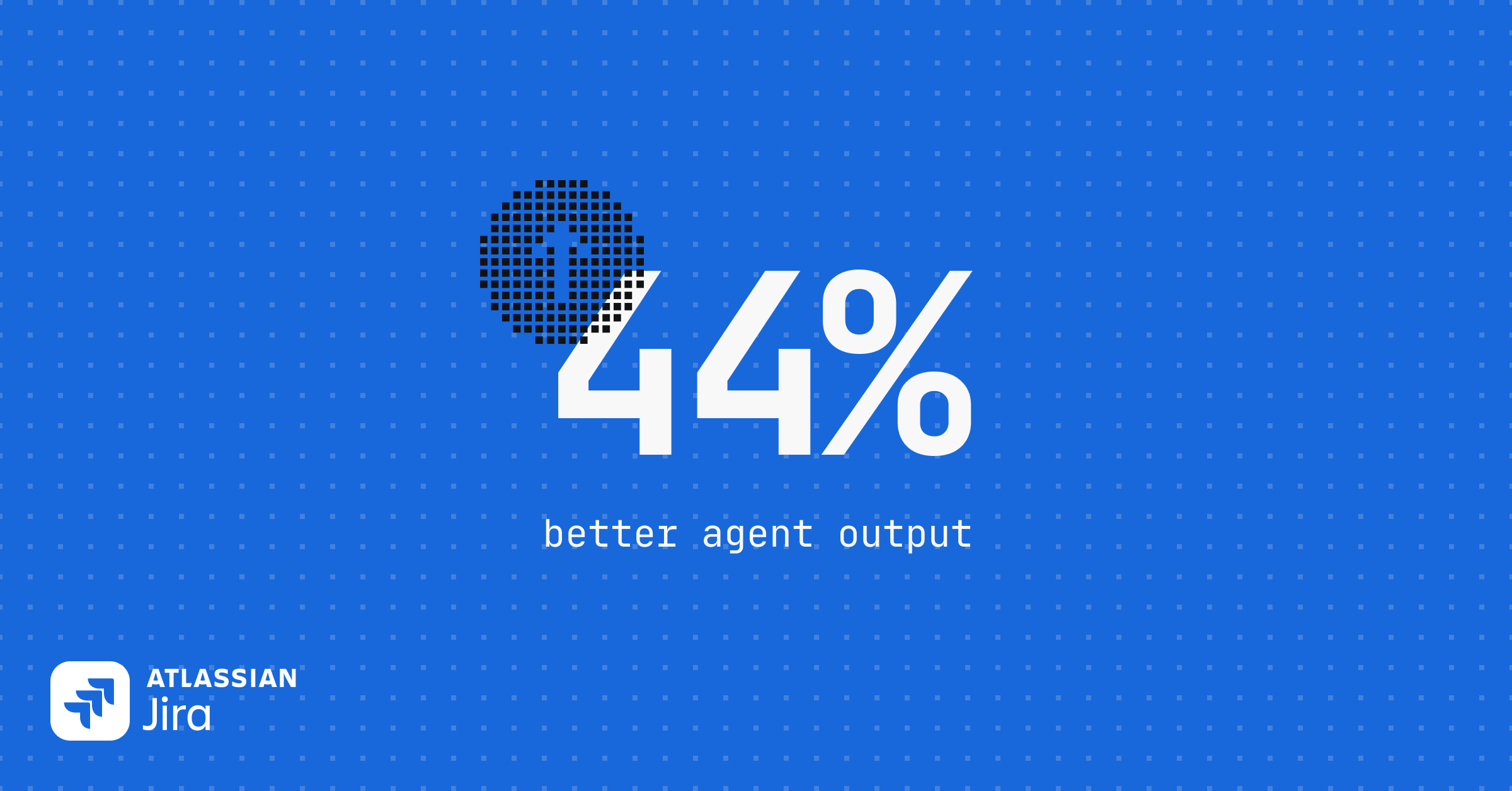
Every token your agent spends on bad context is a token wasted.
The Teamwork Graph in Jira by Atlassian gives agents the context they need to deliver 44% more accurate results, while using 48% fewer tokens.
When every agent works smarter, the whole org moves faster.
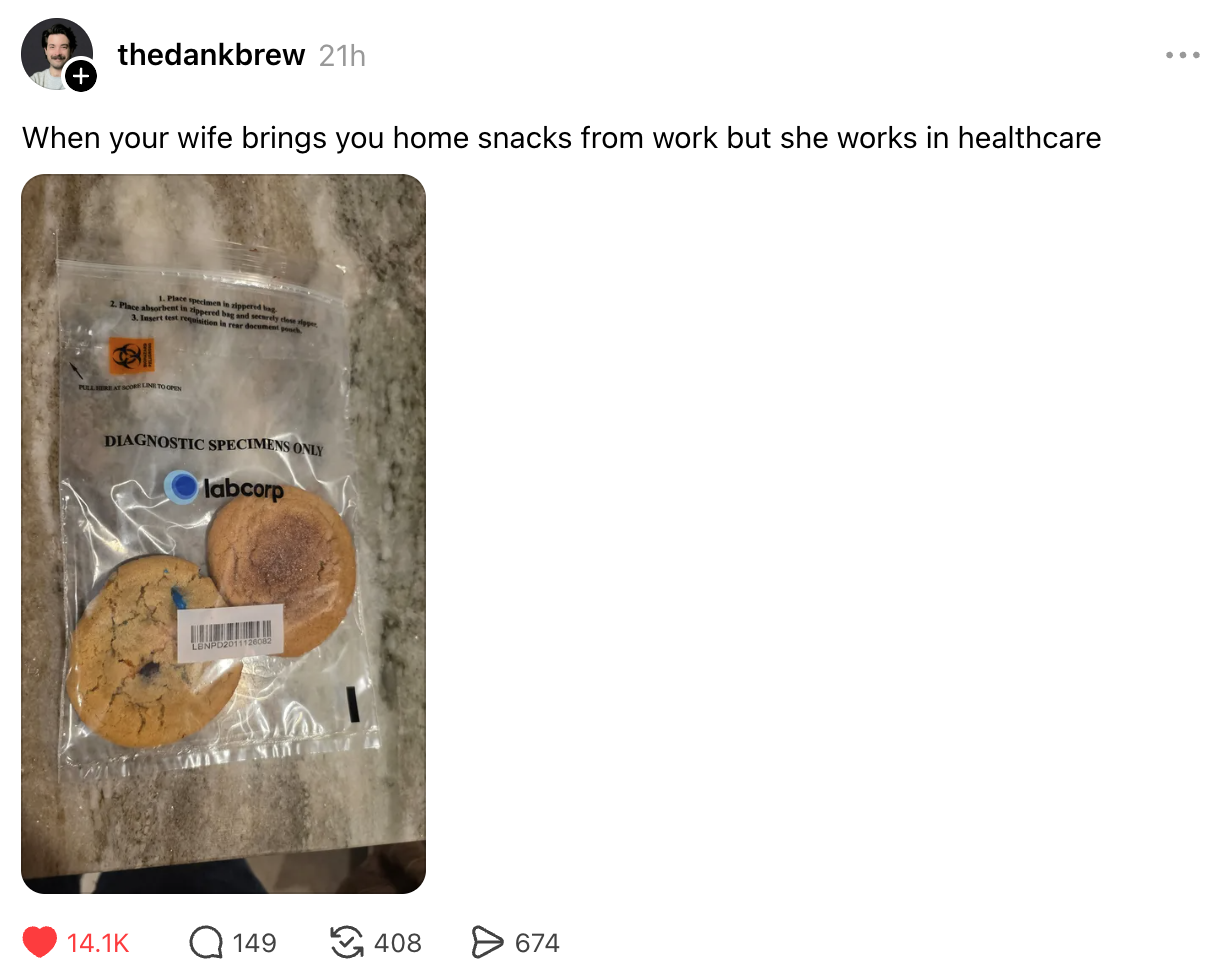
Those good posts
For more good posts every day, follow Casey’s Instagram stories.

(Link)

(Link)
(Link)
Talk to us
Send us tips, comments, questions, and entry-level jobs: casey@platformer.news. Read our ethics policy here.